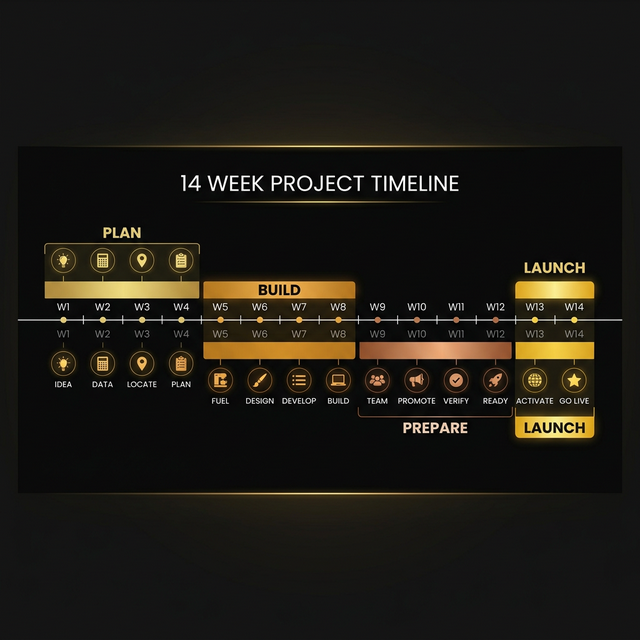
From First Idea to First Customer — Your Complete 14-Week Launch Roadmap
Built on 20+ years of launching hospitality venues across 5 countries | By Epicurean Digital Consultants
Opening a coffee shop feels simple. Find a space, buy an espresso machine, make great coffee, and the customers will come. Right?
The reality is very different. Research shows that approximately 1 in 5 hospitality businesses don't survive their first year, and around 50% close within five years (Bureau of Labor Statistics; Datassential 2025). The reasons are almost always the same: underestimating startup costs, choosing the wrong location, no brand identity, untrained staff, no marketing plan, and running out of cash before the business finds its feet.
This playbook exists because we've seen these failures up close — and we've spent 20+ years preventing them. We've launched 250+ food and beverage outlets across 5 countries, and every lesson we've learned is distilled into the 12 chapters that follow.
Whether you're opening a specialty pour-over bar in Shoreditch, a drive-through in Texas, or a neighbourhood café in Dubai — the fundamentals are the same. This playbook gives you the complete roadmap: what to do, when to do it, what it costs, and what mistakes to avoid.
It's also, honestly, a demonstration of what we do for our clients. If reading this makes you think "I need help with this" — that's exactly why we exist.
Cross-checked: UK coffee shop startup costs typically range from £20,000 to £150,000 depending on size, location, and concept (Sources: British Business Bank; Square UK 2025; UE Coffee Roasters 2025). US equivalents: $80,000–$300,000 (Source: Toast 2025). Costs vary significantly by market.
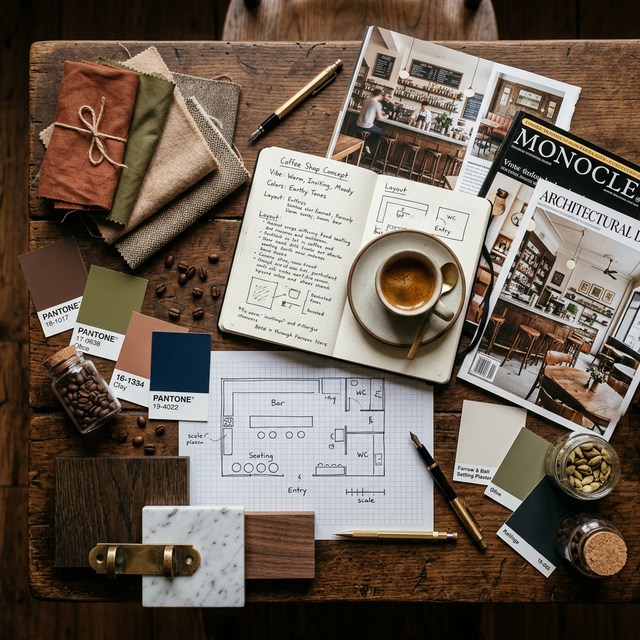
The #1 mistake we see: falling in love with an aesthetic before understanding who your customer is. A beautiful Scandinavian-minimal café is wrong if your location serves busy commuters who want speed, not ambiance. Concept must follow customer, not the other way around.
Write your concept in one sentence. If you can't explain what makes your café different in 10 words, your customer won't be able to either. Example: "The only single-origin pour-over bar in Wimbledon with a dedicated workspace." That's a concept. "A nice coffee shop" is not.
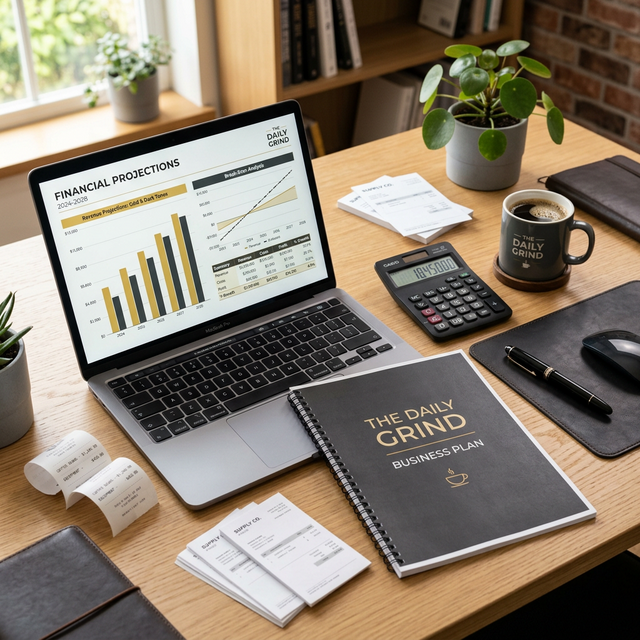
Cross-checked against multiple 2025–2026 sources (British Business Bank, Square UK, UE Coffee Roasters, AT Coffee, Bionic):
| Category | Small / Lean | Mid-Range | Premium |
|---|---|---|---|
| Lease deposit & legal | £3,000–£8,000 | £8,000–£15,000 | £15,000–£30,000 |
| Fit-out & renovation | £5,000–£15,000 | £15,000–£40,000 | £40,000–£80,000 |
| Espresso machine & grinder | £3,000–£6,000 | £6,000–£12,000 | £12,000–£20,000 |
| Other equipment (fridges, blenders, oven, dishwasher) | £2,000–£5,000 | £5,000–£10,000 | £10,000–£20,000 |
| Furniture & fixtures | £2,000–£5,000 | £5,000–£12,000 | £12,000–£25,000 |
| Initial stock (beans, milk, food, packaging) | £1,000–£2,000 | £2,000–£4,000 | £4,000–£6,000 |
| Brand identity & design | £500–£1,500 | £1,500–£5,000 | £5,000–£15,000 |
| Website & digital setup | £500–£1,500 | £1,500–£3,000 | £3,000–£7,000 |
| Licences, permits & insurance | £500–£1,500 | £1,500–£2,500 | £2,500–£4,000 |
| Marketing & launch campaign | £500–£2,000 | £2,000–£5,000 | £5,000–£10,000 |
| Working capital (3 months) | £3,000–£8,000 | £8,000–£15,000 | £15,000–£30,000 |
| TOTAL | £21,000–£55,000 | £55,000–£123,000 | £123,000–£247,000 |
Note: US equivalents approximately 20–40% higher in major metro areas. Middle East costs vary significantly by emirate/city.
A 40-seat café in a decent UK high street location:
This is realistic but not guaranteed. Location, execution, and marketing all determine whether you hit these numbers.
Underestimating working capital is the #1 killer. You need enough cash to survive 3–6 months of below-target revenue while the business builds its customer base. Most first-time owners spend everything on fit-out and equipment, then run out of cash by month 3.
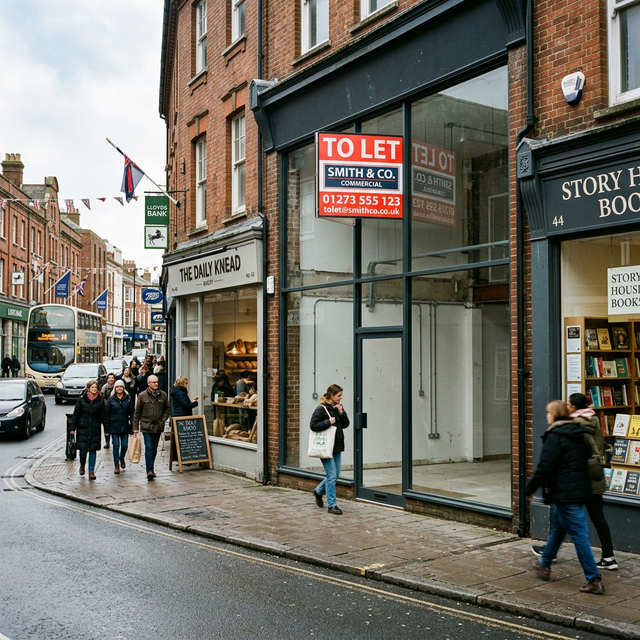
We score every potential location on 10 criteria, each rated 1–10:
Score 70+ = strong candidate. 50–69 = proceed with caution. Below 50 = walk away.
Falling in love with cheap rent. There's usually a reason it's cheap — low footfall, poor visibility, bad area, or a landlord who knows the space has problems. The best location at £3,000/month will make more money than the cheap location at £1,200/month because the footfall pays for the difference many times over.
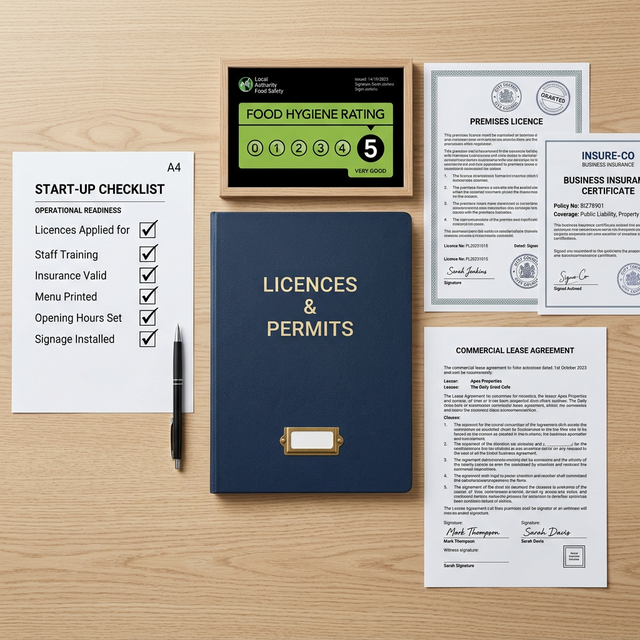
Based on Food Standards Agency, GOV.UK, and local authority guidance:
US licensing is more complex because it varies by state, county, and city. Common requirements include:
Always consult a local attorney for state-specific requirements.
Starting fit-out before getting planning permission for extraction/ventilation. If the local authority denies your extraction system, you've spent thousands on a space you can't use as a coffee shop. Always confirm extraction approval before committing to a lease.
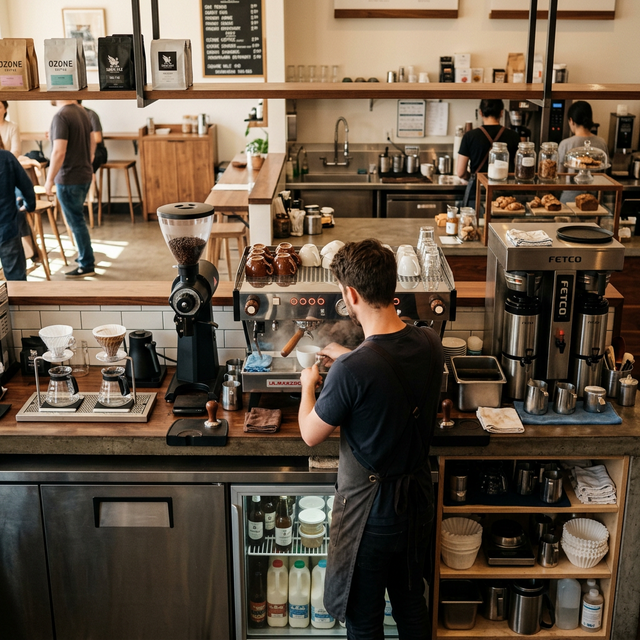
We time-and-motion study your layout before you build it. Every unnecessary step a barista takes = 3–5 seconds lost. Over 300 drinks a day, those seconds become hours. Our café clients typically see a 40–65% improvement in service speed after we optimize their workspace layout.
| Item | Budget | Mid-Range | Premium |
|---|---|---|---|
| Espresso machine (2-group) | £3,000–£5,000 | £5,000–£10,000 | £10,000–£18,000 |
| Grinder(s) | £500–£1,500 | £1,500–£3,000 | £3,000–£5,000 |
| Under-counter fridges (×2) | £600–£1,200 | £1,200–£2,000 | £2,000–£3,000 |
| Blender | £100–£300 | £300–£600 | £600–£1,000 |
| Ice machine | £300–£800 | £800–£1,500 | £1,500–£2,500 |
| Dishwasher (glasswasher) | £800–£1,500 | £1,500–£2,500 | £2,500–£4,000 |
| Water filtration system | £200–£500 | £500–£1,000 | £1,000–£2,000 |
| Oven/food prep (if serving food) | £500–£2,000 | £2,000–£5,000 | £5,000–£10,000 |
| POS system + card reader | £300–£800 | £800–£1,500 | £1,500–£3,000 |
| Smallwares (tampers, pitchers, scales, thermometers) | £200–£500 | £500–£1,000 | £1,000–£2,000 |
Buying the most expensive espresso machine before designing the workflow around it. The machine is only as good as the system it sits in. A £15,000 La Marzocca in a badly designed bar will produce worse results than a £5,000 machine in a perfectly designed workflow.
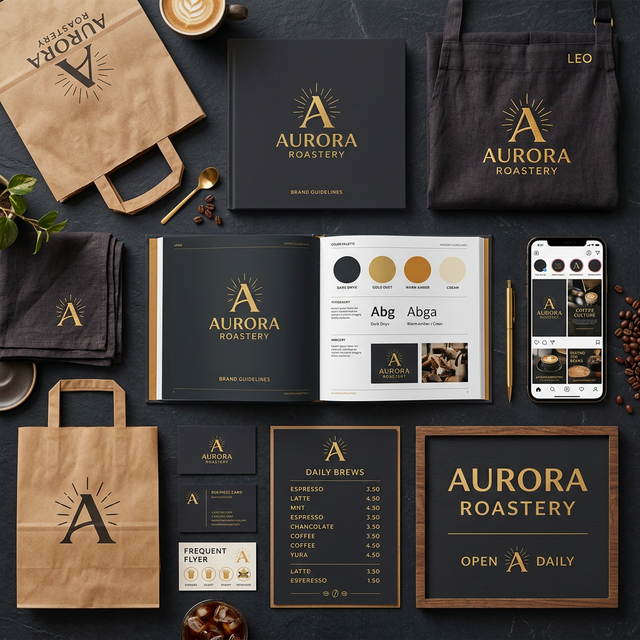
This chapter delivers 142+ individual design touchpoints across 8 phases:
In a market where a flat white costs £3.50 almost everywhere, your brand is the reason someone walks past three other cafés to get to yours. It's not about the coffee — every specialty shop has good coffee. It's about belonging to something. The best coffee shop brands create an identity that customers want to be part of.
Using Canva templates and calling it a brand. A logo from Fiverr plus random Instagram templates does not create brand consistency. When your cups say one thing, your signage says another, and your Instagram looks different again — you don't have a brand. You have visual noise. Invest once, use forever.
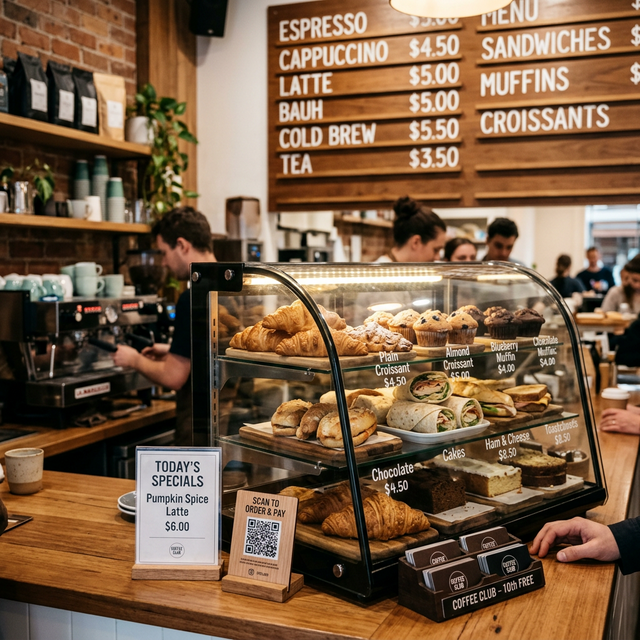
Cross-checked against industry benchmarks (UE Coffee Roasters 2025, Esquires Coffee):
A flat white retailing at £3.80:
But that gross margin is deceptive. Once you factor in rent, staff wages, utilities, insurance, waste, and marketing — net profit margin for UK cafés averages around 8% (IBISWorld 2024). The drink margins are high, but the overheads are real. This is why volume matters, and why food sales (lower margin but higher ticket) are important for building a viable business.
Offering too many items. A coffee shop is not a restaurant. Your core menu should be 15–20 drinks and 8–12 food items maximum. Every additional item increases inventory complexity, waste, and training burden. The most profitable cafés have tight, focused menus.
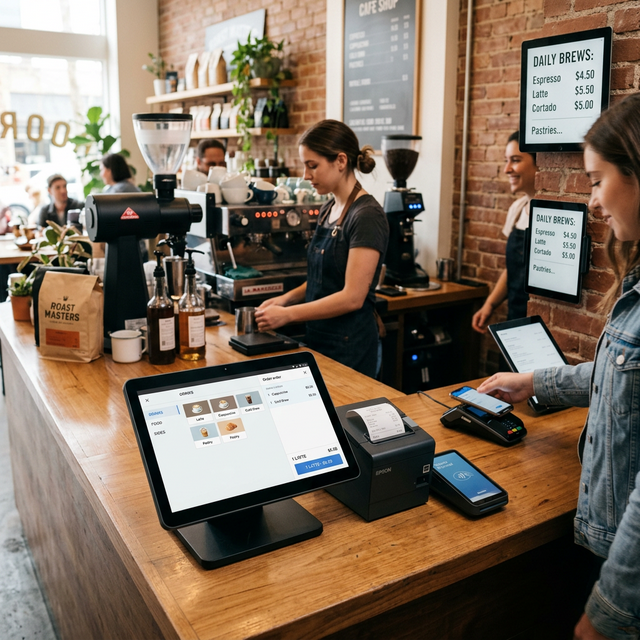
Our recommended stack for a new coffee shop in 2026:
Total monthly tech cost: approximately £50–150/month (excluding delivery platform commissions)
Not connecting your POS to your accounting software from day one. After 6 months of manual bookkeeping, you'll have a nightmare at tax time. Set it up properly on day one — it takes 30 minutes and saves hundreds of hours.
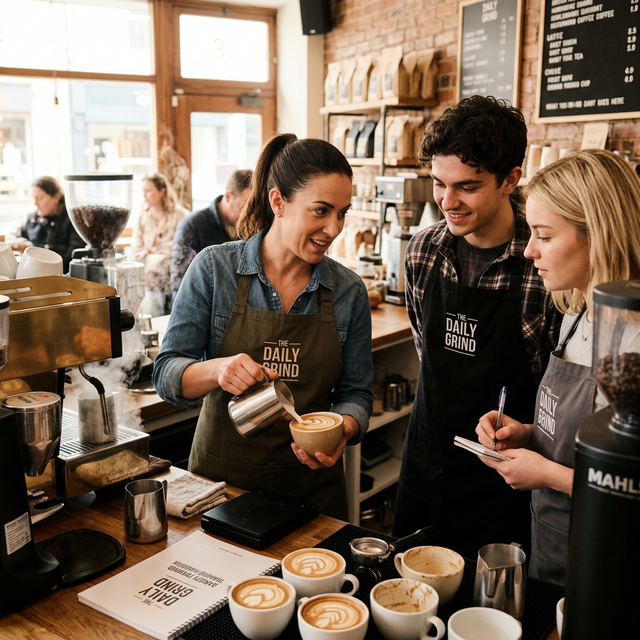
Hiring for coffee knowledge over attitude. You can train someone to make an espresso in 2 weeks. You can't train someone to be warm, friendly, and genuinely caring about customer experience. Hire for personality, train for skills.
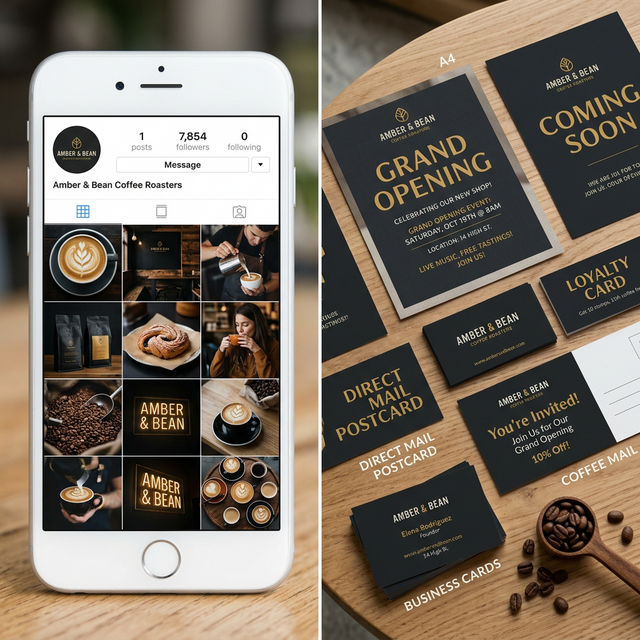
For a new coffee shop, allocate 5–10% of projected first-year revenue to marketing. On £200,000 projected revenue, that's £10,000–£20,000 for the year. Front-load the spend: 40–50% of the annual budget should go into pre-launch and the first 3 months.
Waiting until opening day to start marketing. Your marketing should begin 6–8 weeks before you open. By the time your doors open, you should have an email list, an Instagram following, and local awareness that creates a queue on day one.
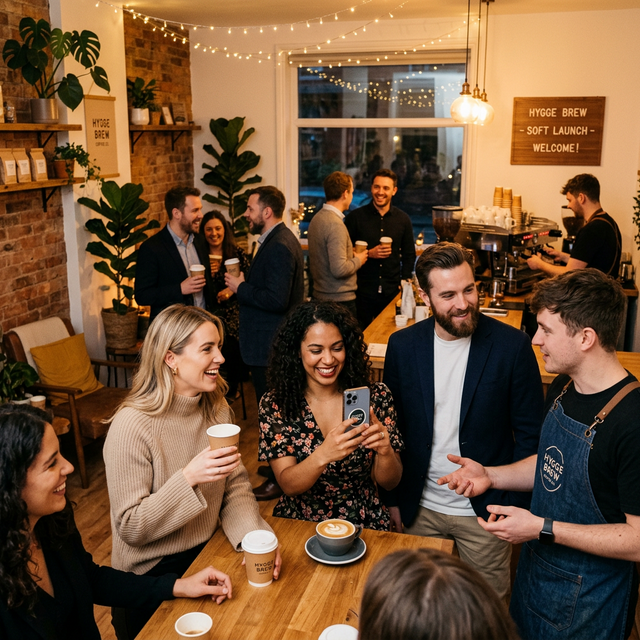
You typically have 3 days between your last soft launch evening and your grand opening. Use them wisely. The most common fixes:
Inviting too many people to the soft launch. It should be 50–70% capacity so you can observe and fix issues. If you fill it to 100%, you're just running a grand opening without calling it one — and any problems will be amplified, not identified.
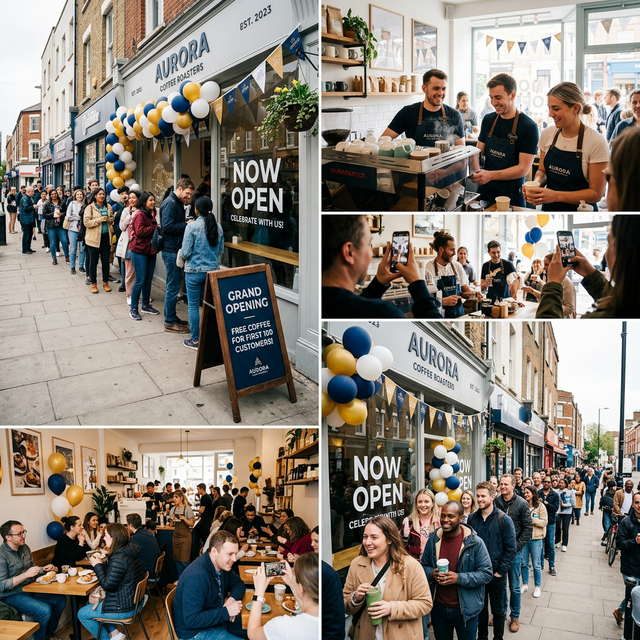
Most of our ongoing retainer clients come to us at the 60–90 day mark. The adrenaline of opening has worn off, the real patterns are emerging, and owners realize they need ongoing strategic support to grow — not just survive. Our Monthly Retainer packages (Light £1,750/month, Standard £3,000/month, Premium £4,950/month) provide exactly that.
You've got the playbook. Every chapter, every checklist, every budget line, every mistake to avoid — it's all here. The question now is: do you want to do it all yourself, or do you want a team that's done this 250+ times to do it with you?
We've been in your shoes. We've made the mistakes so you don't have to. And we've turned those lessons into a system that works.
Your coffee shop deserves to be one of the ones that makes it.
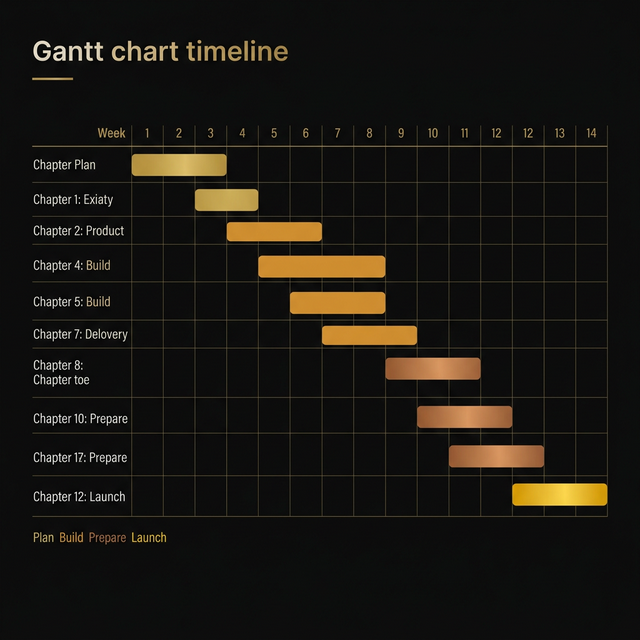
A full checklist of everything EDC delivers across all 12 chapters — print this and use it as your project tracker.
| Essentials £4,500 |
Full Setup £7,500 |
Turnkey £14,000 |
|
|---|---|---|---|
| Concept Development | ✓ Basic | ✓ Full workshop | ✓ Full + personas |
| Business Plan | ✗ | ✓ | ✓ Investor-ready |
| Location Assessment | ✗ | ✓ 1 site | ✓ Up to 3 sites |
| Licensing Guidance | Checklist only | ✓ Full support | ✓ Full + HACCP |
| Kitchen/Equipment Design | ✗ | ✓ Layout | ✓ Layout + sourcing |
| Brand & Design | Logo + basics | Brand kit + menus | Full 142+ package |
| Menu Development | Basic costing | ✓ Engineered | ✓ Full psychology |
| Tech Setup | Recommendations | ✓ POS + basics | ✓ Full stack |
| Staff Training | ✗ | 1-day programme | 3-day + handbook |
| Marketing | Launch checklist | ✓ Campaign plan | ✓ Full execution |
| Soft Launch Support | ✗ | ✓ Planning | ✓ On-site support |
| Grand Opening | ✗ | ✓ Planning | ✓ On-site coordination |
| Ongoing Support | ✗ | 1 month | 3 months |
All prices in GBP. USD, EUR, and AED equivalents on request.
Flexible payment plans available: 3-month (3% fee) or 6-month (3% fee).
Book a free 30-minute consultation and let's discuss your concept, timeline, and budget.
Or call us: +44 7496 766792 | hello@epicureandigitalconsultants.com
Available across all major time zones — UK, US, Europe & Middle East